
Chronic Tendon Injuries
Frequently Asked Questions
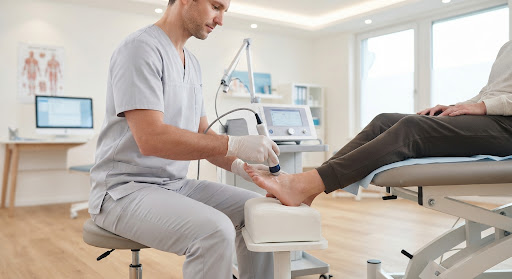
Shockwave therapy delivers targeted acoustic waves into injured tissue. These waves create a biological response that may:
The treatment works by activating the body’s natural healing response rather than masking symptoms.
Shockwave therapy is commonly used for:
Many patients seek shockwave therapy after other conservative treatments have failed to provide lasting relief.
Yes.
Plantar fasciitis is one of the most well-studied conditions treated with shockwave therapy.
Shockwave therapy may help:
Many patients experience significant improvement after a series of treatments.
Shockwave therapy is commonly used for chronic knee pain related to:
By supporting circulation and tissue healing, shockwave therapy may help improve function and reduce discomfort.
While shockwave therapy does not cure arthritis, many patients experience improvements in:
The treatment may help support circulation and reduce inflammation around affected joints.
Yes.
Shockwave therapy is frequently used for:
The treatment may help improve mobility while supporting tissue healing and reducing discomfort.
Many patients use shockwave therapy for chronic back pain, muscle tightness, trigger points, and soft tissue dysfunction.
Treatment may help:
Your provider will determine whether shockwave therapy is appropriate for your specific condition.
Most treatment sessions last between 10 and 20 minutes depending on:
Many patients are able to return to normal activities immediately following treatment.
Treatment recommendations vary based on the condition being treated.
Many patients complete:
Your provider will develop a personalized treatment plan based on your condition and goals.
Some patients notice improvement after the first treatment.
Others experience gradual improvement over several weeks as tissue healing progresses.
Results depend on:
Because shockwave therapy stimulates healing, improvements often continue between treatments.
Athletes commonly utilize shockwave therapy to support recovery from:
The treatment is widely used in sports medicine because it promotes recovery while minimizing downtime.
Shockwave therapy may help improve tissue mobility and support remodeling of chronically damaged soft tissue.
This may be particularly beneficial for:
Shockwave therapy has been used worldwide for decades and is generally considered safe when performed by trained professionals.
Side effects are typically mild and may include:
Serious complications are uncommon.
Shockwave therapy may not be appropriate for individuals who:
A consultation will help determine whether treatment is appropriate.
Enhanced cellular repair and inflammation reduction.
Rapid recovery and systemic inflammatory control.
Manual tension release and improved circulation.
Root cause analysis for long-term health optimization.
Direct nutrient delivery for systemic support.
Personalized paths back to peak performance.